Author: Malvika Agarwal

  • On Early Childhood Education Encountering Pedagogy: An Interview with Veronica Pacini-Ketchabaw

    On Early Childhood Education Encountering Pedagogy: An Interview with Veronica Pacini-Ketchabaw

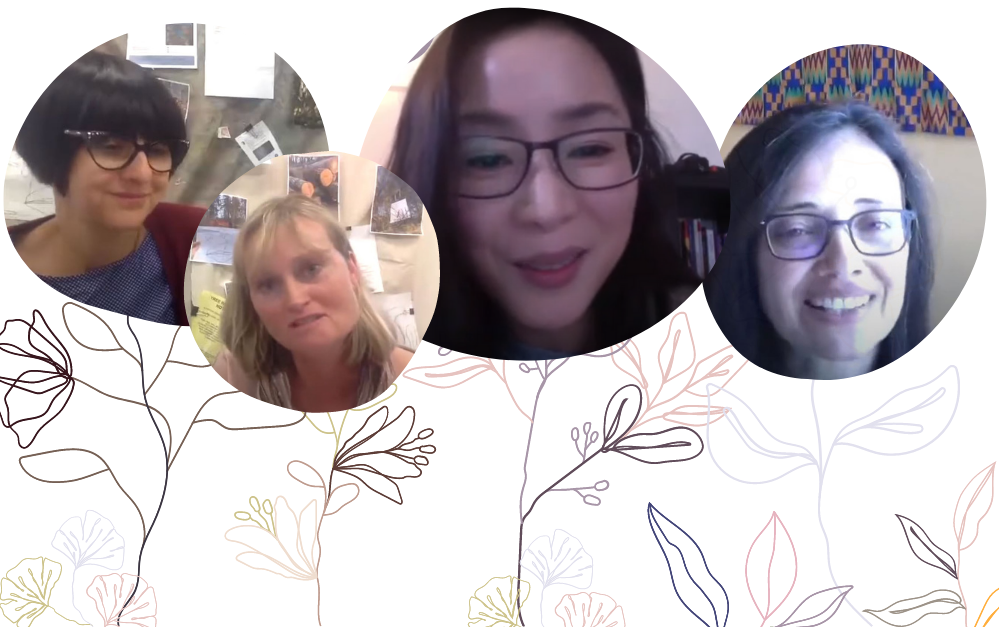
    Cristina Delgado Vintimilla (CDV): This interview takes place in the midst of two projects that you are leading in early childhood education in Canada. Both projects inaugurate the professional figure of the pedagogist. This figure responds, among other things, to the growing interest to think about early childhood education as a pedagogical project. Indeed, the term pedagogist connotes an intimate connection with pedagogy. As these projects unfold, we have experienced that, thinking about pedagogy and engaging early childhood education as a pedagogical project is a complex endeavor. What intrigues you about this project and why is it important to you? I imagine we can think of this encounter between pedagogy and early childhood in many ways. What comes to mind for you and what are their challenges and opportunities based on your view of the work, so far?

    Veronica Pacini-Ketchabaw (VPK): Thank you for these questions Cristina.  Let me begin by clarifying that the two projects that you are referring to are the ECPN (Early Childhood Pedagogies Network) and the PNO (Pedagogists Network of Ontario).  What is important for me is that these two projects, as you said, insist that early childhood education needs to engage in pedagogical conversations, and in doing so challenge the pervasive developmental discourse that early childhood education continues to perpetuate.  I don’t think that I need to say too much about why these projects aim to bring alternative narratives into early childhood.  As Peter Moss and Gunilla Dahlberg reminded us more than a decade ago, developmental psychology as a dominant discourse allows for early childhood education to be constructed as a service for families and as a producer of predetermined outcomes.  Like these authors do, the projects that you mentioned are proposing that we think about early childhood education as a “public forum situated in civil society in which children and adults participate together in projects of social, cultural, political and economic significance” (p. 73).   What intrigues me is how the role of the pedagogist might allow us to open up these kinds of conversations in early childhood education.   What might be possible in early childhood education when we attend to pedagogy rather than child development?  Of course there are multiple challenges.  The main challenge is that Canada might not yet be ready to have this conversation.  Engagements with pedagogical thought require that Canadian early childhood education invents another vocabulary… Yet, I continue to encounter (especially now during the pandemic when early childhood education has been a conversation in the media and political circles) troubling references such as ‘early childhood education as an essential service’, educators as ‘workers’ and members of the ‘workforce,’  and the field as a ‘sector’.  This factory-like lexicon creates certain expectations and moves us away from engaging in early childhood education as a cultural and political project.
    (CDV): As I am listening to you, and I think about early childhood as a cultural project, I think about the tension between, on one hand, education as a system that perpetuates particular structures of interpretation and socializes children into a stabilized state of affairs, and on the other hand, education as what creates the conditions for thinking otherwise futures and for inserting something different into the present. This,  seems to me, to be the tension that you are describing. I would propose that this is a tension that is becoming acutely present as a provocation that pedagogy brings to early childhood education.  In your view, what might early childhood education in Canada need to consider to generatively respond to such provocation? Particularly when considering that– in the broad social imaginary– early childhood is thought in such constraining and instrumental ways as  those described in your example?

    VPK: Yes, that is the tension that pedagogy offers to early childhood education.  There are many things we need to consider.  The main (amongst many) that comes to mind right now is how to work with pedagogists in creating the conditions for thinking otherwise futures.  I often worry that this side of the tension is completely dismissed.  Somehow we have had opportunities to engage in the critique of hegemonic structures within early childhood education.  In my experience, we have become quite skillful at unpacking and unsettling discourses with pedagogists.  The challenge now is to work with pedagogists to create conditions for other futures.  I am thinking about the pedagogical work that we have been doing in the Common Worlds Research Collective.  I have learned so much through my work with you and other fabulous colleagues to challenge myself to dive into the question ‘what could be otherwise?’    I think it is important that pedagogists do not become too comfortable with critiquing educators’ practices.  I am not saying that critique doesn’t have a place in the life of a pedagogist.  It does.  But critique needs to be deeply entangled with the ‘otherwise’, the ‘what if’, the ‘yet to come’.  I want to stress the idea that these two movements are indeed entangled. One does not come after the other.  Like you said Cristina, it is a tension that as pedagogists we need to constantly live in.

    CDV: Indeed, generative tensions need to be cultivated in early childhood education and this is not because early childhood education lacks tensions, but because the tendency might be to ‘master’ and even try to avoid those tensions in the name of protecting what we already know or the familiar ‘how to’ that mark early childhood in Canada.  What do you think might be some of the conditions and dispositions that a pedogist needs to nurture as a way to move past mere critique? And could you share some thoughts about how it would look like if early childhood practices and curricular propositions were driven by the generative force of the “what if”?  I am particularly interested in this  last question because I think that thinking “what if” or the “yet to come” requires much of our attention. As a pedagogista, I consider thinking “what if” as a complicated and demanding mode of engagement with the world.  “What if”  is  at the heart of what I refer to as ideation which, as you know, it is one of the abilities that defines the work of a pedagogista, in the Italian tradition.

    VPK:  As you know, we started to think about some of the conditions that a pedagogist needs to nurture in an article that was just published in Contemporaries Issues in Early Childhood.   Let me address just one here.  In my work with pedagogists in the PNO and ECPN, I have come to realize that interdisciplinarity is one of those conditions that a pedagogist cannot live without.  By that I mean that a pedagogist has to be able to attend to the conditions of early childhood education not only by drawing from a multitude of disciplines (anthropology, sociology, geography and so on) but also be able to encounter these conditions through different theoretical frameworks.  A pedagogist thinks with poststructuralism, feminist Black studies, and/or feminist Indigenous theorizings to challenge the narrow discourse of child development that organizes early childhood education.  Phenomenology is a language that a pedagogist thinks pedagogical documentation with. Feminist environmental writings help a pedagogist to think early childhood education in viral times. Yet, it is not about moving in and out of disciplines and theoretical frameworks.  It is about working transversally with multiple languages.  These languages intermix so that the pedagogist can offer educational proposals that move beyond the monopoly of developmentally appropriate activities.

    To address the second part of your question: I agree that the ‘what if’ requires careful attention in the education of pedagogists (and early childhood education as a whole).  Early childhood education suffers from literalism.  We lack imagination of what might be possible.  This is dangerous because pedagogy needs to be able to think ‘the otherwise’ in order to avoid being squeezed into neoliberal capitalism.  A pedagogist needs to embrace what Loris Malaguzzi called creativity (not psychologically defined).  I think I want to think about this disposition as speculative practice – that is, a practice that is committed to an idea of worlding that keeps the world going in more-just-ways.  I might even say that what makes a pedagogist is to be able to embrace the ‘what if’.   Yes to the idea of ideation, of invention, of creative projection!

    When sharing this piece, please include the following citation: 
    Pacini-Ketchabaw, V., & Delgado, C.V. (December 2020). On early childhood education encountering pedagogy: An interview with Veronica Pacini-Ketchabaw. Pedagogist Network of Ontario Magazine, 1(1). Retrieved from https://pedagogistnetworkontario.com/on-early-childhood-education-encountering-pedagogy-an-interview-with-veronica-pacini-ketchabaw/
  • A Matter of Pedagogy

    A Matter of Pedagogy

    The pandemic has dismantled, paused, or eroded many of our common ways of being in the world, both within and beyond our early learning settings. It is forcing our collective attention to consider what is it that matters most to us and to this world. Its presence is also illuminating systemic concerns within the type of world and type of life we have created both in education and beyond. Responding to the pandemic with pedagogical concerns, declarations, and ethics, which orient toward questions of “matters”, I belive is of necessity.

    What matters and who matters is the threading by which our worlds and lives have been made and unmade. Attending to the ways that matters shape and influence what is, and what could be, is a practice in thinking pedagogically.

    Ann Wilke

    Thinking with “what matters” is critical and of this moment. 2020, both as a worldwide social crisis and a situated emergency in Canadian early childhood education, has exposed to us how our worlds have been created, how they can be made and unmade, how this particular world responds to matters of life and death, and how particular matters of life and death are deeply situated in unjust and unequal ways. The pandemic has illustrated the interconnection between all humanity, and the precarious interdependency between the human and more than human. It has reminded us that we are deeply situated within this world; a world where there are relations far more powerful at play than we choose to attend to in our status-quo (differentially privileged) everyday engagements. COVID-19 has demonstrated for us how matters of both human and economy crisis can disrupt, reduce, generate, and reform our current ways of shaping life and living well. It has made visible the tension in which particular matters can be in deep conflict with one another, and have particular trajectories when taken up in particular ways. Matters of life or death, matters of race, matters of ecology, matters of economy, deeply entangled and threaded through one another; all creating particular possibilities and particular erosions.

    Mattering is what situates the world. It is through the way matters – known beyond their tangible, often assumed to be inert physical form, and instead attended to as complex material, discursive, and unevenly lived bundles – are enacted on that professed values, manifestos, and intentions are given life and form. Matters have influence over what can be and become, and we are implicated in what comes to matter in every situation. This is an especially urgent concern for pedagogists, as we hold to account how matters we participate with/in entangle with subject formation as they shape who an educator, child, guardian, or administrator can be amid particular matters. In mattering, there is no neutrality. In the very micro-movements we make each and every day through our thoughts, gestures, actions, languages, and silences, we are shaping the ways that particular matters come to matter more than others. In early childhood education, we have incredible influence in the ways particular matters are exposed, expressed, experienced, and enacted on. We chose – immersed in governmental and systemic decisions about what counts as mattering – the spaces of learning we design. We decide what is worthy to draw children’s attention to, what is valuable, and how it is valued. We make choices around what is important and useful to this world and life, and what is not worthy of our time. All of these daily decisions impact the type of life and type of world we are creating collectively, both within and beyond the early childhood education setting.

    As Haraway (2016) reminds us “it matters what thoughts think thoughts. It matters what knowledges know knowledges. It matters what relations relate relations. It matters what worlds world worlds. It matters what stories tell stories” (p. 12).

    A provocation I want to offer to both pedagogists and educators: we must always be conscious to the ways particular ideas have come to matter; and how their mattering reduces or flourishes particular possibilities. We must determine what the matters are that we chose to correspond with, and what may become (im)possible within the logics of such matters.

    Responding to the pandemic with pedagogy and questions of matters is particular necessary at this time if we believe this world could be a more livable place. Pedagogy calls us to be of and with this moment. It asks us to stay within the uniqueness of the context that is unfolding before us and believe in the possibility of otherwise; an otherwise that we imagine to be possible in the type of world or type of life we yearn for. Pedagogy asks us to stay with the process of learning as we engage in the work of living alongside of one another and in relation with all things. It asks us to let go of our taken for granted assumptions and past scripts. Pedagogy, at this time, invites us into the heart of this moment of pandemic with uncertainty, curiosity, and wonder. It asks us to be with the uniqueness of this life today, and instills hope through the generative possibility of what we, and this world may become.

    Deepening our commitment to pedagogy at this time matters to me, because it is not an easy response. As Maxine Greene (1978) points out,

    “Dewey believed, as does Sartre, that what we become, what we make of ourselves, depends upon what we do in our lives. And what we do cannot be simply routine and mechanical. It must be conscious, interested and committed. If it is not, if we content ourselves with being behaving organisms rather than reflective persons engaged in ongoing action, the quality of our selfhood becomes thin and pallid” (p. 26)

    Engaging in the ongoing action of life, of living as conscious, interested, and committed individuals requires more of us than maintaining the status quo in education, and especially as a pedagogist committed to responding well with messy pandemic relations, tensions, and inheritances. To think pedagogically requires us to meet up with the experience of change and uncertainty with both vulnerability and curiosity. It asks us to make committed decisions on matters that feel necessary and important. As such, activating and committing to pedagogical processes is a disruptive process – it moves us away from behaving within the scripts of life / living that we have been shaped by. We have seen that through the process of igniting pedagogy within early childhood education in Ontario. Pedagogy pushes against deep scripts we have held about what education is, what makes a good early childhood educator, and what children need. It creates uncertainty, tension, and chaos to the foundation of how we often think about early learning and its purpose. To think pedagogically requires of a pedagogist a committed decision to stay with this discomfort and continue to respond in pedagogical ways. Otherwise we revert to minimizing this discomfort by reaching for practices that feel familiar; patterns and habits that feel comfortable, even if they may not serve this work or this world well (such as such as measuring of a life by normative scripts, goals of school readiness, rubrics, and prescribed curriculums created from the desire for future capitalistic conquest of the global market). These types of inherited practices keep us shaped (and shaping) within specific ways of life, specific ways of thinking, specific ways of being right or wrong, and contained within a specific kind of world; a world that is already defined and foreclosed. And much like what we are experiencing within this pandemic, at times it is easier to hold tight to what feels “normal” or push for a return to “normal”, than to work with uncertainty as a invitation to create a different way of living and a different type of life in early childhood education.

    As a pedagogist, I wonder what might be possible in this space of deep disruption if we claim both our uncertainty and commitment to pedagogy? I wonder what might happen if we respond with questions of matter and refute foreclosing toward all that we already know, to what feels most comfortable? What if we resist a return to a new normal and stay within the spaces of generative possibility that pedagogy ignites? What might become then?

    I want to offer you these pedagogical questions, offered to me by the Pedagogist Network of Ontario, that I want to work to keep alive at this time:

    • What is it that matters? And why?
    • What are the matters that need us now; that need us most? Why?
    • And, How might we stay with the questions of “matters” and work at the rigorous demands living in response to the possibilities these questions may offer?

    As a pedagogist, I want to extend the following propositions as a launch point for thinking pedagogically about, and responding in pedagogical ways to, what matters in our particular heres and nows in early childhood education. Let’s hold these questions close as we ignite a response to this situation, this unique moment. Let’s move pedagogical work beyond the traditional walls of learning institutions. Let’s carry these questions with us; bringing them to the dinner table, to the boardrooms, to the ZOOM chats, the protest lines. Let’s ask the children, the Elders, the trees, the earth, the recycling bin, the viruses, the night sky. Let’s ask the world. Let’s listen with open, curious hearts to what might be unearthed by these incredibly sober but auspicious questions. Let’s trace what happens as we activate these questions, and then let’s consciously and intentionally begin taking up particular matters that just might move us toward futures we dream of. Because once we truly understand what matters, what we want to stand for, matters move us with them as we become entangled within the making of worlds. We become formed in relation to matters; and matters are formed with/in us. Importantly, in responding to the provocation of “what matters”, we become answerable to what it creates in the making of worlds, and what it erodes in its wake.

    In the eloquent words of Sara Ahmed (2017) “citation is how we acknowledge our debt to those who came before; those who helped us find our way when the way was obscured because we deviated from the paths we were told to follow” (p. 16). As such I must acknowledge with deep gratitude the following: Peter Moss, David Jardine, Maxine Green, Veronica Pacini-Ketchabaw, Nicole Land, Randa Khattar, Cristina Delgado Vintimilla, Karen Barad, Gunilla Dahlberg, Alan Pence, Sylvia Kind, and the Ontario Pedagogist Network (an evolution of the Ontario Provincial Centre of Excellence collective).

    References
    
    Ahmed, S. (2017). Living a feminist life. Duke University Press: USA.
    
    Greene, M. (1978). Teaching: The Question of Personal Reality.Teachers College: Columbia University. Available online at https://maxinegreene.org/uploads/library/question_personal_reality.pdf
    
    Haraway, D. (2016). Staying with the trouble: Making kin in the Chthulucene. Duke University Press: USA. 
    When sharing this piece, please include the following citation: 
    Wilke, A. (December 2020). A matter of pedagogy. Pedagogist Network of Ontario Magazine, 1(1).Retrieved from https://pedagogistnetworkontario.com/pedagogist-conversation/
  • What Would be Possible if Education Subtracts Itself from Developmentalism

    What Would be Possible if Education Subtracts Itself from Developmentalism

    In the spirit of these questions, we are interested in highlighting some of the legacies of child development and interrogating the concept of developmentalism.  We do so as an invitation for pedagogists to continue unsettling the domination of such discourse in early childhood education and the ways developmental knowledges are implicated in maintaining the status quo. By focusing on developmentalism, we highlight the socio-political-ethical intentions that child development activates through early childhood education. Although child development has become ‘taken-for-granted’ knowledge within early childhood education, many researchers and educators have been thinking otherwise (Pacini-Ketchabaw et al., 2016; Pacini-Ketchabaw et al., 2015). In this article, we reiterate the work of reconceptualist early childhood scholars and put into question a naturalized or non-political understanding of childhood, children, and education (to read more about developmentalism, please see Burman, 2018; Cannella, 1997; Lubeck, 1994; and MacNaughton, 2005).

    Our first focus of concern is with how child development assumes and prescribes ideas of who a human is – and, in these edicts, it stabilizes the normative contours of who a child can be – giving to education the coordinates of the ‘proper’ childhood and the ‘proper’ child. In child development, human growth is made proper within culturally and historically contested coordinates. Put differently, developmentalism asserts both who the child should be and sets a measure for the particular normative developmental trajectories that this child’s development must follow. A belief in the principles of developmentalism also creates a predetermined formula of universal quality pedagogical practices that are necessary to ensure optimal development. These tenets of development are enshrined with such high levels of validity and reliability that, as educators, we are often shocked and dismayed when children who are provided with best pedagogical practice experience failure (Walkerdine, 1998). Equally disheartening is how we might use developmental theory to conceptualize the “good” early childhood educator. Langford’s (2007) work demonstrates that for many in the early childhood field, professional competency is represented by an educator whose practice reflects developmental theory. Under this idea, only practice that is based in developmental theory is recognizable and acceptable – leaving very little space for reimagining what might be possible for an early childhood educator.

    Entangled closely within the desire to guide children’s development along a universalized and normalizing trajectory is the concomitant work of course-correcting and remediating. Children who do not conform to Euro-Western developmental norms are therefore readily positioned as in need of intervention or support. Functioning to bound children’s lives to unfold only in accordance with a highly political and neutral norm, developmentalism also works to control and erase non Euro-Western experiences of childhood. This maintains the production of proper humanist subjects; children who have the skills and dispositions to be ‘good’ citizens by perpetuating structural projects of humanism, neoliberalism, and ongoing settler colonialism. Indeed, it is these processes of investing in the creation of particular kinds of subjects and subjectivities that, we think, pedagogists need to think with and unsettle.

    There are many reasons why a pedagogist would need to unsettle the possibilities for subjectivities, relations, and life avowed by developmentalism. We consider that this is a necessary effort because, as we have been pointing out, developmentalism erases and eradicates other possibilities for life. In other words, it marks ways of living and conceiving childhood that do not ascribe to particular colonial universals as abnormal, undesirable, or expendable. This is the material violence of developmentalism. As a universal paradigm for understanding childhood, developmentalism enacts an ontological violence by restricting the intellectual, embodied, and experiential resources with which we might engage children. Thus, embedded within structural narratives of normativity and the desire to support children to align with inherited notions of success, academic achievement and productive adulthood, developmentalism becomes the only dominant framework that educators are taught to engage with children – making this the intellectual coercion of developmentalism.

    What becomes of early childhood pedagogy beyond developmentalism?

    As we have been pointing out, in the fixity of its developing methods and assumptions, child development gives education a ‘banister’ to hold on to (see Arendt, 1981)—one that furthermore ‘works too well’ for education to pursue her evidentiary quest for legitimacy as a social science. The dependency on this banister is so self-evident that it often can seem impossible—even itself aberrant, deviant or heretic—to think otherwise, or to imagine a child and a childhood that are not defined through pre-understandings of developmental stages and corollary behavioural norms. This impossibility is at the heart of education as a colonial project, as an eclipse of diverse possibility as and within childhood by a regnant ethos.

    This is the reason why, for us, child development has little to offer to pedagogy. Unlike child development, pedagogy hides away from practices of application or logics of human management. Pedagogy is concerned with radical interpretative and contextual forms of thought and practice (to read more, please see “What is Pedagogy” by Cristina D. Vintimilla). It is a wordly encounter, never functional authority. It is always, therefore, rethinking what renders the world inert—and especially how children and childhood participate in this rendering. Pedagogy, we want to propose, asks questions that work in the name of living well together: how do we create more liveable worlds for all? How do we de-center human mastery and the idea that humans are unitary, independent subjects and instead orient ourselves toward ethical and political responses to complex, messy, more-than-human worlds?

    While for developmental psychology the aim of early childhood education is to authoritatively “know”, “predict” and “assess” children to guide them toward maturation and proper humanity, pedagogy is interested in the making of alternative and more-just worlds.  Making early childhood education a pedagogical project requires that educators orient themselves toward entanglements and relational connections, and notice the complex human and more-than-human political contours of educational encounters. Thus, we suggest that we become interested in opening up and nourishing particular processes; especially processes concerned with ethically and politically-tense struggles so that we can nourish subjectivities and relations that respond to the complexities of our times.

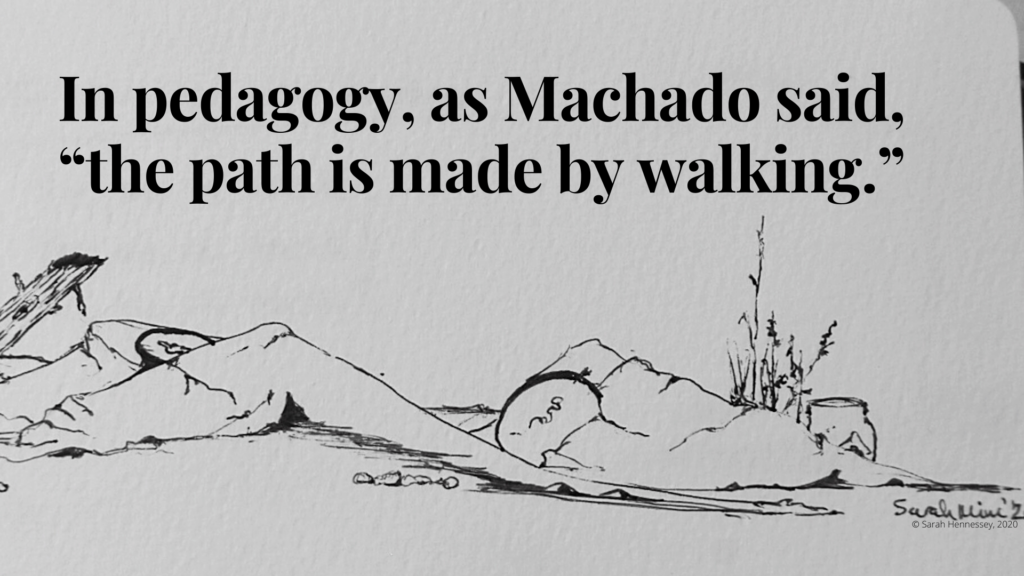
    This proposition entails pedagogical processes that are committed to creating and sustaining conditions where childhood is a voidless subjective process marked by alterity (Vintimilla, 2012). In other words, our proposition seeks opportunities for new subjectivities, new ways of being human (or unbecoming human perhaps), and heterogeneity, (or the proliferation of diversity, of a commonality, or community, in difference). Let’s remember: it is pedagogy that creates the conditions for the legitimation of multiple ways of being, for multiple childhoods. It is pedagogy that is interested in opening up curricular processes that have no predefined ideas of who or what a child is. It is pedagogy that is open to the possibility of alternative narratives and not about the repetition of predefined normative vectors. It is pedagogy that is concerned with the creation of collective spaces, of common and uncommon worlds. Child development is resolutely never interested in these processes. What would be possible if education subtracts itself from developmentalism? Pedagogy would be a possibility. Creating spaces for dwelling that are ethical and creative would be possible. Creating a collective life that keeps the question of the commons open would be possible. In pedagogy, as Machado said, “the path is made by walking.” So, unlike developmentalism’s competent pieties, the state of affairs that pedagogy assumes is so broad as to give the lie to breadth itself…and, in this, is instead breath itself. We breathe as we walk. And we do it together.

    This essay is reprinted with author permission. This essay was originally posted on the Ontario Provincial Centre for Excellence website and is now available on https://www.earlychildhoodcollaboratory.net/resources

    References:
    
    Arendt, H. (1981). The life of the mind. Houghton Mifflin Harcourt.
    
    Burman, E. (2018). Towards a posthuman developmental psychology of child, families and communities. In International Handbook of Early Childhood Education (pp. 1599-1620). Springer, Dordrecht.
    
    Cannella, G. (1997). Deconstructing early childhood education: Social justice and revolution. Peter Lang.
    
    Langford, R. (2007). Who is a good early childhood educator? A critical study of differences within a universal professional identity in early childhood education preparation programs. Journal of Early Childhood Teacher Education28(4), 333-352.
    
    Lubeck, S. (1994). The politics of developmentally appropriate practice: Exploring issues of culture, class, and curriculum. In B. L. Mallory & R. S. New (eds), Diversity & developmentally appropriate practices: Challenges for early childhood education (pp. 17–43). Teachers College.
    
    MacNaughton, G. (2005). Doing Foucault in early childhood studies: Applying poststructural ideas. Routledge.
    
    Pacini-Ketchabaw, V., Kind, S., & Kocher, L. L. (2016). Encounters with materials in early childhood education. Routledge.
    
    Pacini-Ketchabaw, V., Nxumalo, F., Kocher, L., Elliot, E., & Sanchez, A. (2015). Journeys: Reconceptualizing early childhood practices through pedagogical narration. University of Toronto Press.
    
    Vintimilla, C. D. (2012). Aporetic openings in living well with others: The teacher as a thinking subject [unpublished doctoral dissertation]. University of British Columbia.
    
    Walkerdine, V. (1998). Developmental psychology and child-centred pedagogy. In J. Henriques,
    
    W. Hollway, C. Urwin, C. Venn, & V. Walkerdine (Eds.), Changing the subject: Psychology, social regulation, and subjectivity (2nd ed.; pp. 153–202). Routledge.
    When sharing this piece, please include the following citation: 
    Delgado, C.V., Land, N., Kummen, K., Pacini-Ketchabaw, V., & Khattar, R. (December 2020). What would be possible if education subtracts itself from developmentalism. Pedagogist Network of Ontario Magazine, 1(1). Retrieved from https://pedagogistnetworkontario.com/what-would-be-possible-if-education-subtracts-itself-from-developmentalism/

  • What is Pedagogy?

    What is Pedagogy?

    I am often asked this question, and often my first impulse is to want to hide from it. I think this is because I am aware of the very complex layers of meaning and the historicity that one will need to engage with and take up, particularly if one considers that this question is being asked within the Canadian context—and, even more specifically, within that of early childhood education.

    In my hesitation, I also wonder if we as educators are willing to engage with such layering of meaning and historicity. After all, the question is not “How might we begin to think of pedagogy?” What is pedagogy? risks evoking a requisition for a definition, and therefore a foreclosure of pedagogical thought from the start. Herein is the bind of the question “What is pedagogy?” Perhaps sharing its contextual difficulties, its inherent foreclosures, is the best place to start. As, when learning to speak another language, we are invited first to say that we cannot speak it.

    I will never forget the conflicted and puzzled responses I received many years ago when I presented to early childhood educators and colleagues the idea that early childhood is a pedagogical context. This idea was not well received. It was seen as a sort of threat to the notion of care. It sounded too directive, too “educational.” However, since then, the concept of pedagogy has proliferated in early childhood contexts. In whispers of possibility, it has started to engage imaginations. It is even present in new policy documents. I find myself noticing that the words pedagogy and pedagogies are repeatedly used now in the context of early childhood education in almost interchangeable ways, as if they are one thing, an obscure, sophisticated supplement of some sort, rather than an indeterminate field of responsive, generative, and collaborative practices of interpretation, ethical critique, and invention. We seem to want to encompass pedagogy within our existing thinking about education and care, rather than to see how we are already encompassed by this thinking, determined by it, enclosed and limited within its assumptions so as to be better able to respond and to invent knowledge, subjectivities, and communal forms of life, in and as education.

    In this small contribution, I would like to outline some thoughts about what pedagogy is. Of course, these thoughts are never independent from who is thinking them—my history, intellectual commitments, and relation with this concept. In this, I want to start by attempting to rescue the concept from its unfortunate and quite common understanding, particularly in the contexts in which I work, where pedagogy is seen as that which gives us direction in how to manage and instruct children to be able to achieve predetermined educational ends. In my view, pedagogy could not be farther from this idea.

    Pedagogy is that which thinks, studies, and orients education: its purposes, its protagonists, its histories, its relations and processes.

    Pedagogy is that which thinks, studies, and orients education: its purposes, its protagonists, its histories, its relations and processes. Pedagogical thought lives within the tension between theory and practice, between what happens and the reflection on what happened. I find that one of the key pedagogical struggles is how not to identify pedagogical thought with only theory or practice. Pedagogy attends to and locates this tension in situated and contextual ways (in the everyday). Pedagogy is not interested in universalisms or objectivist views of knowledge creation.

    Considering this, we can say that pedagogy is a body of knowledge (in Europe it is considered a social science). It is active knowledge, one that seeks new bases on which to think in diverse and unfolding conditions. This body of knowledge has a long history. Its cradle is Ancient Greece. Its birth was intimately related to philosophy, with whom it keeps a close relation, and over the centuries it has tried to find its identity by letting go of the reliance on disciplines considered more legitimate in education, such as scientific management, and then psychology. 

    Pedagogy, as a body of knowledge, thinks educational practice; it is reinvigorated by this practice and transforms educational practice. This is why a pedagogist is someone who not only tries to unsettle practice but also tries to find (and sometimes even liberate) the creative force of practice.

    Pedagogy is always interrogating (and responding to) the conditions of our time and its status quo. It does this at the same time it poses the question “What kind of human might we need to consider to respond to the conditions of our times?” Pedagogy asks this question because pedagogy is not only interested in teaching and learning. It is also interested in what conditions are enabled through particular educational processes and curriculum making. What idea of the human do they enable? What subject formations are legitimized and delegitimized? What relational logics do they enact? In other words, in a very basic understanding, pedagogy is interested in the creation of an experience. The question then is “What kinds of experiences are being created in educational contexts? What is their value, their unseen beauty, their vanishing, their withholding and bursting forth?” As history tells us, these experiences can be emancipating or subjugating, deterministic or eventful. They can support logics of dominion or try to keep the question of the collective open.

    Therefore, pedagogy is not only interested in describing the conditions of a particular time context. As Silvana Calaprice (2016) writes, “pedagogy must also activate new provocations for the education of our times” (p. 34). This means not only analyzing the status quo and its relation to education, but also activating possible orientations that will provoke educational processes to invent a living curriculum that experiments with alternative propositions and intentions. I am thinking here about propositions and intentions that would allow for experimentation with different subjective processes and alternative futures. This is why contemporary pedagogy must ask education to find new responsibilities. (This is a topic to be taken up on another occasion.) Considering this, it is not enough to ask “What is pedagogy?” Perhaps we must ask instead “What are early childhood pedagogies for a postcolonial, settler, consumer-driven, and carbon-dependent society?”

    If pedagogy has a language, its language is interdisciplinary. This is because pedagogical thought is porous and willing to be contaminated by diffractive conversations with other disciplines. These conversations help pedagogy to enrich its views and engage the familiar from diverse perspectives. Personally, I could not think education without the arts.

    In the Canadian early childhood context, pedagogy is what—among many other invitations—would invite us to consider that it is not enough to continue “window shopping” for the newest educational approach. Much more is at stake, and much more is possible. The invitation instead would be to become ever more attuned to the situated complexities in which one lives, and to therefore become more educationally inventive. This is why pedagogical thought lives at the heart of the relevant invitations that the reconceptualist movement in curriculum theory has invited us to consider over the rocky years of its ensuing neoliberal reaction.

    I will leave you with a last consideration. For me, pedagogical thought is always creative and generative, with as many questions as answers. Pedagogy is particularly interested in creating a collective space. It is called to create something that goes beyond centering the work in the development of an individual I. Pedagogy, for me, is interested in the creation of a life—not as a model or an ideal, but as an everyday practice that puts thought into action, that is interested not in prescribing a life but in working at a life, becoming studious of it, being interested in its different forms and formations in what it does and what it invites and in how we become of it. A life that is life-making.

    Pedagogy, then, is a decision—to ask its own questions, which are mostly as yet unknown.

    This essay is reprinted with author permission.  It was originally posted on the Ontario Provincial Centre of Excellence website. It is now available on https://www.earlychildhoodcollaboratory.net/resources

    When sharing this piece, please include the following citation: 
    Delgado, C.V.(December 2020). What is pedagogy. Pedagogist Network of Ontario Magazine, 1(1). Retrieved from https://pedagogistnetworkontario.com/what-is-pedagogy/
  • Editors’ Note Issue 1

    Editors’ Note Issue 1

    We hope that this magazine intersects with pedagogists’ ongoing conversations and situated experiences by highlighting their pedagogical trajectories and inventiveness. 

    This magazine serves as a living archive of the emergent and generative work that takes place in the encounter between pedagogy and early childhood education as we know it. In this issue, we wonder: What possibilities will be realized? What shifts might emerge? And how might we follow pedagogical inventiveness and its demand to think beyond what we already know?

    We made the decision to share our work through a magazine in order to be accountable to a digital form that is public, speculative, rooted in a particular context and commitment, and that is continually on the move. Refusing our website content to relax into staunch stability, we want to create something unfamiliar (a magazine? A knot? A landing site? A confrontation? Something yet to be knowable?) that demands work and return as modes of engagement. While the Pedagogist Network of Ontario (PNO) Magazine will be organized into issues, we want to cultivate novelty and strangeness beyond only the moment of launching a new issue. As the work of a pedagogist demands, we hope readers will linger with and retrace their encounters with each piece. We encourage readers to share articles through different social media pathways. 

    We hope that the magazine will keep traces of complicated pedagogical work, and that these traces will become part of a broader memory that is presently emerging and is nourished through the multiple situations, projects, events and artifacts. We hope the magazine becomes a manifestation of pedagogists’ situated and collective work. In this way, the magazine is both historical and prospective.

    The works we share in this magazine enact an ethical commitment to the inventive, risky, courageous labour of theorizing and enacting the work of a pedagogist. We invite readers to attend to the rich temporal complexities of doing pedagogical work as a pedagogist in Canada. 

    In this first issue of the PNO Magazine, we open with a conversation between Veronica Pacini-Ketchabaw and Cristina Delgado Vintimilla. They discuss the pedagogists’ practice as the work of creating conditions to think otherwise futures in early childhood education. In our inaugural Pedagogist Conversations section, PNO pedagogist Ann Wilke shares a provocation with the intricate question ‘what matters for thinking pedagogically amid an ongoing COVID-19 pandemic?’. Finally, we offer two previously published essays: What is Pedagogy? (by Cristina Delgado Vintimilla) and What Would be Possible if Education Subtracts Itself from Developmentalism (by Cristina Delgado Vintimilla, Nicole Land, Kathleen Kummen, Veronica Pacini-Ketchabaw, and Randa Khattar). 

    The PNO Magazine articles are demanding and anticipatory. They asks of us something beyond cutting and pasting, skimming and forwarding. Invention, response, participation, and answerability matter as each piece offers forward possibilities for us to grapple with in early childhood education. that needs re-envisioning. As readers sink into the articles’ complexities and provocations, we hope we might begin to weave an embodied and inventive vocabulary for thinking pedagogically in Canada – that is, a vocabulary that nourishes and is nourished by ongoing pedagogical conversations.

    We look forward to thinking together. 

    Cristina Delgado Vintimilla, Nicole Land, Veronica Pacini-Ketchabaw, Randa Khattar, Kathleen Kummen, and Fikile Nxumalo

    When sharing this piece, please include the following citation: 
    Delgado, C.V., & Land, N. (December 2020). Editor’s note. Pedagogist Network of Ontario Magazine, 1(1). Retrieved from https://pedagogistnetworkontario.com/editorial/

  • Early Childhood Pedagogy: Veronica Pacini-Ketchabaw Interviews Peter Moss

    Early Childhood Pedagogy: Veronica Pacini-Ketchabaw Interviews Peter Moss

    The interview was published on July 14, 2020 by the Journal of Childhood Studies in its 45th Volume and No. 2(2020)  as an Invitational article.

    DOI: https://doi.org/10.18357/jcs452202019742

  • Early Childhood’s Aesthetic Experience in the Digital Age: Perspectives and Connections

    Early Childhood’s Aesthetic Experience in the Digital Age: Perspectives and Connections

    Our conversation travelled from what we open ourselves to when we think of aesthetics as experience to the importance of a pedagogist standing for something. In that, we also chatted about the importance of making choices when formatting research questions to thoughtfully shape our curricular relations, and into questions of how digital technologies shape our everyday entanglements in early childhood education.

    Lorenzo opened by speaking about the trajectory of his work of becoming a pedagogista, which we held in dialogue with the processes of becoming a pedagogist that we are working to nurture here in Ontario: how do we see the work of becoming a pedagogist as sustaining a process of undoing and re-knotting? How do we think of becoming a pedagogist as participating in processes that do not conclude with having acquired a particular designation but that work to orient us toward certain dispositions necessary for creating conditions for locally meaningful pedagogical work?

    Lorenzo then shared with us his work at the intersections of pedagogy, aesthetics, and digital technologies. He offered for us a proposition of the importance of holding strong commitments and making decisions about how to create particular aesthetic experiences with technologies.

    Holding Strong Commitments and Making Decisions

    Cristina, the pedagogista with the Provincial Centre, connected this to the pedagogical commitments that we work to activate with the Provincial Centre: what opportunities for bringing to life our pedagogical commitments might we create when we think of aesthetics as an experience? When we think aesthetics as an experience entangled with digital technologies, how might we craft ‘research questions’ that hold close to our commitments? Lorenzo offered the idea of adult (educator, pedagogist) as researcher with digital technologies and aesthetics: what educational possibilities might we open when we take seriously our active role in creating conditions for inquiry with technologies and aesthetics as experience? How do we engage with technologies and aesthetics as something to think with (and, weaving back to the work of the Provincial Centre, as exposures) that help to shape the questions we can propose and the ways that we take up those questions with children? This emphasizes the importance, we think, of making decisions as a pedagogist – it matters what exposures, technologies, aesthetic conditions and experiences, and commitments that we think with. What we stand for as a pedagogist is deeply consequential.

    Making Decisions as a Pedagogist
    Exploration Through Documenting
    Intentions and Specificity

    We concluded our discussion with some questions from participants, where we thought with how more-than-human others entangle with digital technologies and aesthetics. Here, the importance of context and space in co-shaping possibilities for living well together was brought to the forefront. Linked to our work with the Provincial Centre, this makes us think about the necessity of thinking about relations beyond only centering humans: how does attending to the always entangled relations within particular contexts shape our commitments, questions, decisions, and work as pedagogists? How might thinking relations more expansively interrupt our status-quo practices of engaging with digital technologies and aesthetics with children?

  • Pedagogy and the Role of the Pedagogista: A Perspective

    Pedagogy and the Role of the Pedagogista: A Perspective

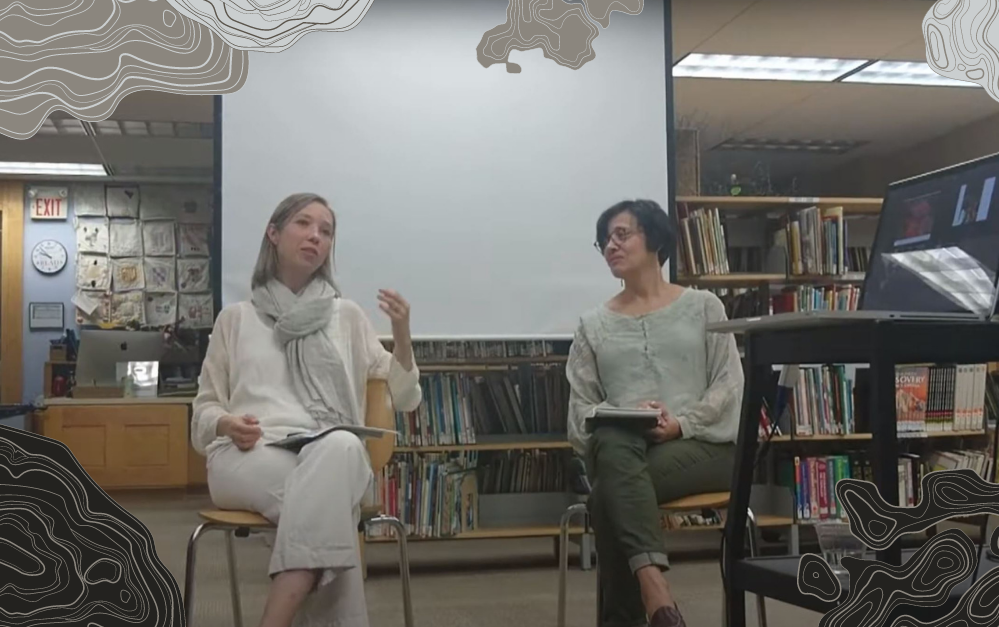
    In this exposure hosted by the Early Childhood Pedagogy Network, Professor Silvana Calaprice from the University of Bari, Italy. In what follows, we share clips from the discussion, moderated by Dr. Randa Khattar, between Professor Calaprice and Dr. Cristina D. Vintimilla, assistant professor at York University and pedagogista with the Provincial Centre. We anchor each set of clips with some context and questions we hope you will grapple with and carry with you.

    1. On the work of a pedagogist

    For Silvana Calaprice and the tradition of pedagogical study she thinks with, to be a pedagogist is to grapple with deeply ethical questions: 

    • What concept of the human and of the child do I hold?
    • With what histories, knowledges, worldviews, philosophies, and relations do I build my understanding of the child?
    • How does my concept of the child shape my actions and possibilities for my actions as a pedagogist?

    Silvana offers that the understandings we hold of children and humans are never crafted in isolation. Rather, these are a common project, one built within a collective of pedagogists and lively worldly conditions.

    Sharing two examples – image of the child as competent, and “care” – Silvana invites us to consider how pedagogists must invent and tend to trajectories and processes that disrupt status-quo ideas of education as an applied field. Silvana insists on the provocation that pedagogists must be interested in opening up spaces and relations that create conditions for a collective to respond well to complex contexts. As pedagogists, she suggests, we must trace how our concept of the child shapes the situated relations we create, and we must answer to the local relations we create. How we participate in relations is woven with our non-innocent concepts of the human and the child. Questions that pedagogists must continually revisit include these:

    • How do I come to understand children and humans?
    • What is my concept of the human?
    • How do I understand children?
    • How do my actions, and the educational processes I open up, activate my conceptions of children and humans?
    • How am I accountable to these processes and concepts within a collective? 

    2. What is pedagogy?

    Silvana asserts that pedagogy is a particular mode of study – a way of knowing and navigating worlds – that is concerned with thinking the purpose of education. In thinking the purpose of education, Silvana offers that we must think with subject formation and with living well within the relations and contexts we inherit and inhabit:

    • What subjectivities do we want to cultivate to bring something generative into the life of a collective?
    • How do we care for transformational relationships within our particular contexts?
    • How do we create educational processes that open up possibilities for living well together in these times? 

    We hear Silvana arguing that pedagogy is resolutely against application. It refutes the interpretivist, individualist focus of psychology, which aims to understand and remedy unitary children’s behaviours. Pedagogy orients toward invention, not intervention. Pedagogy is concerned with encountering uncertainties and opening up processes toward different, tentative, more just futures. In this way, pedagogy inhabits the edges of theory and practice, weaving them together in the name of educational processes. Pedagogy is also, Silvana contends, carefully multidisciplinary: It is in constant dialogue with other disciplines, but it knows that these disciplines do not hold dear the same questions as pedagogy. This creates multiple questions for pedagogists to carry:

    • What relations do I stand for when I center questions of living well together in precarious times?
    • How do my practices, relations, and concepts of children, humans, and subjectivities shape particular responses toward inhabiting unfamiliar futures in a more-than-human world?
    • What modes of interdisciplinarity do I bring to my work as a pedagogist – with whom, and with what histories, do I think, read, write, cite, and speak? Why? How?

    3. Having pedagogical commitments 

    Silvana contends that pedagogy stands for particular political commitments: it is against applying a model; it refuses regulatory neoliberal images of competence; it subtracts itself from extractive self-centered assessments of what children already know; it complexifies status-quo conceptions of following the child in emergent curriculum; it wants to erase instrumental conceptions of education where teaching is framed as assisting children to fulfil a universalized, predetermined developmental trajectory. Pedagogists must not, Silvana insists, simply be someone who does a job. They must be deeply invested in their work, because they have situated pedagogical commitments and endeavour toward uncompromisingly pedagogical dispositions of openness and attentiveness. Pedagogists believe in what they do. Silvana offers the concept of “pedagogical energy,” which is the impulse and motion that propels pedagogists to continue researching, to constantly wonder, and live as a question, how to respond to fraught contexts. This impulse fuels pedagogical questions of how we might innovate educational processes in response to a particular context: What is it to do pedagogical work that refuses to be universalizable or scalable; work that subtracts itself from inherited logics of ‘best practices’?  

    For us, Silvana is invoking a pedagogist deeply concerned with responsibility, where to be response-able is to be able to respond well to questions children, pedagogists, and others get knotted up in, in particular local conditions. This is not an individualized performative notion of responsibility, but rather one that is concerned with living well together in the precarious contexts we inhabit. Responsibility here threads through our relations as we grapple with questions of how to be response-able with children. Silvana offers that stories, and the stories children live within, are a starting point for getting to know what it is we must respond within, but she suggests that we need to go beyond knowing stories to inventing processes that enact our orientations and commitments, that create possibilities that are not currently present. Pedagogists, Silvana generously insists, have responsibilities to do the difficult, uncertain work of creating processes that are grounded in our pedagogical commitments and orientations. For pedagogists, this raises incredibly complex questions:

    • Do I believe in what I do?
    • What do I bring to this work?
    • Why do I hold these orientations within this place, when I hold to questions of living well together?
    • How do I enact these commitments in response-able relations?


  • Becoming a Pedagogist and Co-creating Pedagogical Processes

    Becoming a Pedagogist and Co-creating Pedagogical Processes

    • The process of becoming a pedagogist, and its tensions, difficulties, beauty;
    • How the process of becoming a pedagogist is an act of co-creating a pedagogical experience (with the situated place you work within – relating to educators, more-than-human others, politics, place, ethics, children, families, precarities);
    • The need to reconfigure and co-invent pedagogical processes so vibrant curriculum making becomes possible;
    • The need to subtract taken-for-granted practices, ideas, and habits from thinking to open up toward re-invigorated practices;
    • Pedagogical commitments and what they do, and the hard work of activating these commitments and standing for something

    This panel conversation, moderated by Dr. Veronica Pacini-Ketchabaw (Faculty of University of Western Ontario), featured:

    • Dr. Bo Sun Kim (Faculty at Capilano University and Pedagogist with Simon Fraser University Childcare Society)
    • Narda Nelson (Pedagogist with University of Victoria Childcare Services)
    • Dongryun Kim (Educator with Simon Fraser University Childcare Society)
    • Sherri-Lynn Yazbeck (Educator with University of Victoria Childcare Services).

    In this following clip, Dr. Bo Sun Kim and Narda Nelson speak about the radical dialogue needed to live in question and enact collective pedagogical commitments to keep possibilities open.

  • A Dialogue with a Pedagogista

    A Dialogue with a Pedagogista

    They discussed the history and personal story behind becoming a pedagogista. Followed by a discussion of the ethics, histories, and legacies of early childhood education and the possibilities for co-creating ethically responsive pedagogies. They highlighted the significance of collaboratively engaging with ethically responsive pedagogy in early childhood education.

    They deliberated on pedagogical disruptions that foster collaboration between educators, children, and families. Furthermore, they considered inviting vulnerabilities as a possible starting point for sharing stories of legacies with children and others.

    Cristina and Veronica then called attention to remaining mindful and conscious that pedagogy is non-innocent. In other words, pedagogy embodies a specific kind of intention that is both personal and political in early childhood education.

    They closed with a discussion on expanding horizons of possibility in early childhood education, and offering the metaphor of bundling in the work of a pedagogista.

    “I wonder if you can start by walking us through how you became a pedagogista…”

    “I constantly ask myself: What kind of experiences are we generating?”

    “What does collaboration look like?” 

    “Where do we start our stories of legacies with children? With others?” 

    “If this is a space that is not innocent, and if this is a pedagogical gathering, then it’s a space for something more than me or the child.”

    “We are creating a life together.”

    “We can enter a space of debate when we understand that it is not about me or you but it is about this thing that we are trying to create.”

    “If that is what is going to frame our horizon, it’s a very, very narrow horizon.”

    “I am bundled with all of these stories and history that I carry with me – beyond the pedagogista – that just walks with me.”